Rib-knit beanie
Deep-cuff rib knit, woven label in the fold
$26
Screen-printed tees and hoodies with night-forest artwork · Missoula, Montana
Beanies & the print room
Our rib-knit beanie is the one piece we never print on. The rest of this page walks through how a drawing becomes a screen, a screen becomes a shirt, and why every drop stays small.
The beanie
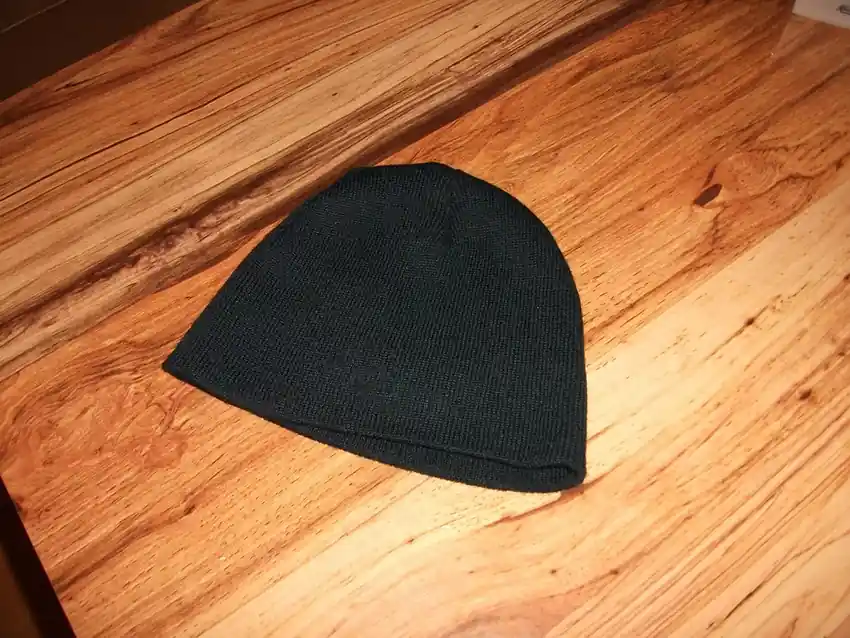
The beanie is knitted in a tight 2x2 rib from a soft cotton and wool blend, long enough to fold back into a deep double cuff over the ears. Ink does not sit well on a stretchy rib, so instead of printing it we stitch a small woven label into the fold: a crescent moon and a single pine in gold thread on a charcoal ground.
One size stretches comfortably over most heads, and the cuff lets you wear it slouched or snug. It comes in charcoal pine and washed black. Hand-wash it cool and dry it flat, and it keeps its shape for many winters.
Add gift wrap to any order and the pieces leave folded in recycled kraft paper with cotton twine, and no price inside.
Deep-cuff rib knit, woven label in the fold
$26
Recycled kraft paper and cotton twine, per parcel
$4
Sketch to screen
Water-based ink
Most heavy, glossy shirt prints use plastisol, a thick ink that sits on top of the fabric. It is forgiving to print and never dries in the screen, but you can feel it, and on a heavyweight tee it turns the chest into a stiff patch. Water-based ink works the other way: it soaks into the cotton and dyes the fibers, so the print moves with the shirt and gets softer each time it is washed.
It asks more of the print room. Water-based ink starts to dry in the mesh within minutes, so we work quickly, keep screens flooded between pulls and wipe them down with a damp sponge. It also needs a longer, hotter pass through the dryer to drive all the water out before it is properly set. A few designs use a discharge base, which lifts the dye out of a dark shirt and replaces it with color, for an even softer feel on charcoal and black.


Why drops are small
A drop is the number of pieces we print from one set of screens before we put them away. We keep that number low for three reasons. First, the screens: water-based ink is hard on emulsion, and a short run means every shirt is printed while the stencil is at its sharpest. Second, the shelf: a small print room has a small shelf, and printing only what we expect to sell means nothing sits in a box for a year. Third, the drawings: when a drop is finished we would rather draw something new than run the same design forever.
Every piece in a drop is counted, and when a design is close to the end of its run, the confirmation email says so. When a design sells out and enough people ask, we coat a new screen and reprint it as a fresh drop. We do not sell wholesale below the size of a full drop, so a shop that wants to carry our work takes the whole run or waits for the next one.
A quick word on cookies. This site keeps one note in your browser to remember the choice you make here. Counting and ad-tracking scripts stay switched off until you turn them on, and right now the site carries none. Privacy notes from the press.
One switch, off unless you flip it: